TIME LOCKER LOGISTICS 2.0 / INVESTMENT OPPORTUNITY 2026
The future of delivery is no longer centralized.
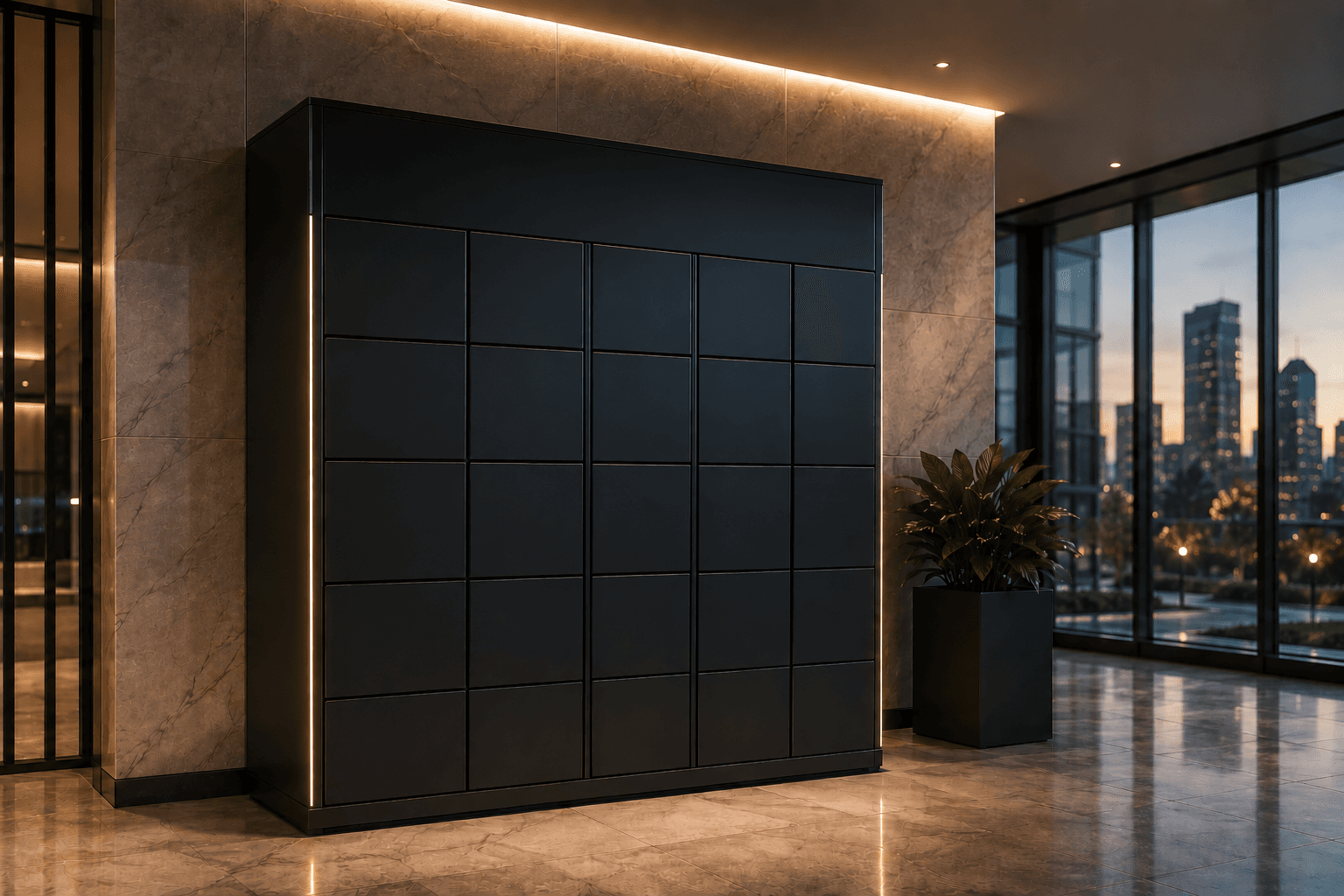
Time Locker is building the world's first decentralized network of autonomous logistics terminals designed to eliminate failed deliveries.
The platform transforms last-mile logistics into scalable digital infrastructure where smart terminals act as digital twins for users, properties, and businesses.
80M
failed deliveries every day
~100%
first-attempt delivery ambition
5M
active terminals long-term vision
CO2
lower emissions through fewer repeated routes
FROM LAST-MILE DELIVERY TO ZERO-DISTANCE LOGISTICS
Instead of people waiting for packages, the infrastructure waits for the courier.
Traditional delivery systems force users to adapt to logistics. Time Locker reverses this logic and turns attempted delivery into guaranteed delivery infrastructure.
THE MARKET OPPORTUNITY
80 million failed deliveries every day.
Global e-commerce generates enormous operational waste. Up to 25% of delivery costs are connected to failed delivery attempts, billions are lost annually through redelivery logistics, and repeated routes dramatically increase CO2 emissions.
failed deliveries
repeated courier routes
urban congestion
rising fuel prices
parking penalties
theft and parcel exposure
customer frustration
THE TIME LOCKER SOLUTION
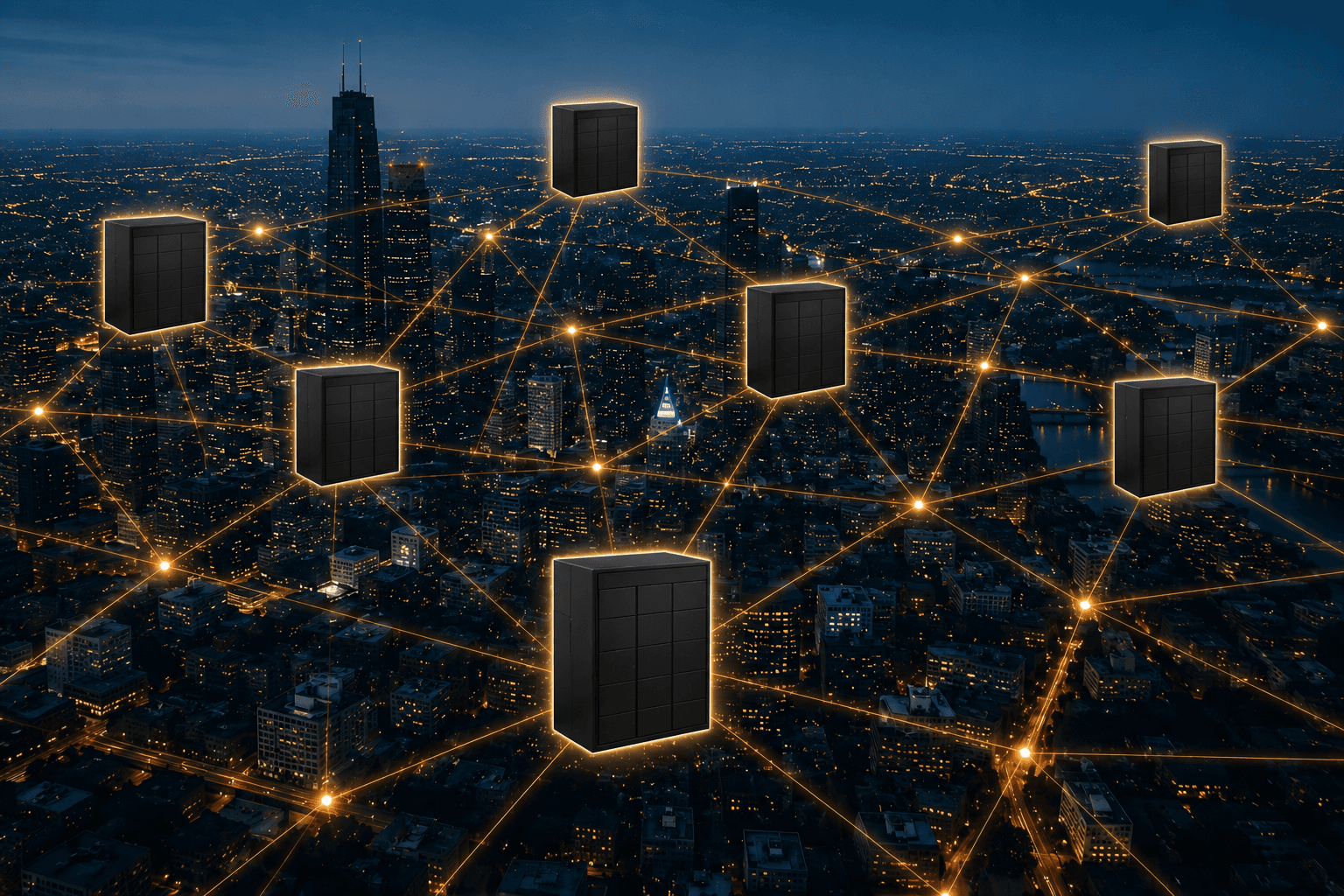
Logistics 2.0: decentralized infrastructure where every property can become part of a connected delivery network.
The system combines smart hardware, autonomous access, real-time software, digital verification, offline-first security, and AI-supported logistics optimization.
smart hardware
Logistics 2.0 layer
autonomous access systems
Logistics 2.0 layer
real-time software infrastructure
Logistics 2.0 layer
digital verification
Logistics 2.0 layer
offline-first security
Logistics 2.0 layer
AI-supported logistics optimization
Logistics 2.0 layer
couriers
Digital Twin connection
e-commerce platforms
Digital Twin connection
cloud infrastructure
Digital Twin connection
users
Digital Twin connection
properties
Digital Twin connection
logistics operators
Digital Twin connection
INVESTMENT THESIS
Time Locker is not simply a hardware company.
It is a logistics infrastructure platform, software ecosystem, smart city technology layer, and decentralized revenue network.
Logistics Infrastructure Platform
Time Locker is not simply a hardware company. It is a logistics infrastructure platform.
Software Ecosystem
The terminals, users, properties, and delivery events are connected through software infrastructure.
Smart City Technology Layer
The network is positioned as future urban logistics infrastructure for cities and dense locations.
Decentralized Revenue Network
Properties become logistics assets, users become infrastructure participants, and delivery networks become decentralized.
Unlike traditional locker systems owned entirely by corporations, Time Locker enables decentralized infrastructure ownership.
faster scalability
Decentralized ownership advantage
lower capital exposure
Decentralized ownership advantage
viral network expansion
Decentralized ownership advantage
local infrastructure participation
Decentralized ownership advantage
aligned economic incentives
Decentralized ownership advantage
REVENUE MODEL
Multiple revenue streams inside one decentralized logistics network.
Time Locker is designed as a recurring revenue ecosystem, not a one-time hardware sales model.
1. Delivery Transaction Fees
Courier companies pay per successful delivery into the Time Locker network.
2. Premium User Access
Users can access priority delivery, advanced controls, smart access permissions, and delivery analytics.
3. Business & Property Partnerships
Buildings and businesses hosting terminals participate in recurring revenue models.
4. Advertising & Attention Economy
The platform can support digital advertising, partner campaigns, local promotions, and integrated marketplace visibility.
5. Smart City & Infrastructure Partnerships
Future integration opportunities include urban logistics optimization, municipal partnerships, ESG initiatives, and AI route optimization systems.
WHY THE MODEL SCALES
Time Locker scales differently than traditional locker systems.
Traditional systems depend on expensive public infrastructure, permits, centralized rollout, and high operational complexity. Time Locker is designed for lower infrastructure friction.
decentralized
Scalability advantage
modular
Scalability advantage
privately deployable
Scalability advantage
asset-light
Scalability advantage
digitally controlled
Scalability advantage
OFFLINE-FIRST SECURITY
Security is one of the core foundations of the Time Locker ecosystem.
The infrastructure is designed to keep verified delivery operations active while minimizing cybersecurity exposure and dependency on live connectivity.
Offline-First Architecture
Terminals continue functioning without internet connectivity, keeping delivery operations alive during outages.
Encrypted Local Access
Encrypted digital keys operate locally, reducing dependency on real-time connectivity.
Verified Digital Events
Each transaction creates a verified digital event inside the platform.
MARKET EXPANSION STRATEGY
From Croatia pilot to EU rollout and global network scaling.
The long-term network vision is 5 million active terminals across major urban markets.
Phase 1 - Croatia
Pilot deployment and national rollout.
Focus:
- validate operations
- prove network usage
- build national deployment model
Strategic output:
- repeatable playbook
- local proof of demand
- operational baseline
Phase 2 - EU Expansion
Strategic partnerships with major courier operators.
Focus:
- regional courier partnerships
- multi-market deployment
- software-led operating model
Strategic output:
- EU network density
- partner integrations
- scalable rollout structure
Phase 3 - Global Network Scaling
Decentralized infrastructure growth across major urban markets.
Focus:
- global terminal growth
- decentralized ownership
- smart city infrastructure layer
Long-term vision:
- 5 million active terminals
- global logistics network
- recurring infrastructure revenue
FINANCIAL STRUCTURE
Recurring logistics revenue rather than one-time hardware sales.
As the network expands, software margins increase, operational efficiency improves, and infrastructure value compounds.
Hardware Deployment
Physical terminal growth creates the infrastructure base of the network.
Recurring Logistics Revenue
Network activity creates repeatable revenue rather than one-time hardware sales.
Scalable Software Margins
As the network expands, software margins increase and operational efficiency improves.
Compounding Infrastructure Value
Infrastructure value compounds as terminals, users, properties, and courier integrations grow together.
OPERATIONAL INFRASTRUCTURE
Built for scalable deployment, tracking, and network performance.
Time Locker uses structured operational workflows across assets, logistics, installation, activation, maintenance, and real-time monitoring.
Unique Asset ID
Each device receives a Unique Asset ID for tracking from production batch, warehouse location, dispatch, installation, activation, and live network operation.
Digital Workflows
The operating system includes warehouse zoning, digital work orders, delivery confirmation, installation verification, and photo proof uploads.
Real-Time KPI Monitoring
Core operational rule: if the activity is not inside the app, it did not happen.

SMART CITY & ESG IMPACT
Autonomous logistics infrastructure for more efficient cities.
By reducing unnecessary delivery routes, Time Locker supports future ESG-focused urban infrastructure strategies.
Reduced traffic congestion
Fewer repeated delivery routes reduce unnecessary movement through dense city areas.
Lower CO2 emissions
More successful first-attempt deliveries support cleaner urban logistics.
ESG infrastructure strategy
The platform supports future ESG-focused urban infrastructure and municipal logistics strategies.
WHY TIME LOCKER
A new infrastructure layer for next-generation last-mile logistics.
Time Locker combines real infrastructure, digital operations, network effects, asset-light scalability, smart city integration, and recurring revenue.
Logistics 2.0
A new infrastructure layer for modern delivery systems.
Real Infrastructure
Physical devices connected to scalable digital operations.
Network Effects
Every new terminal increases overall system value.
Asset-Light Scalability
Growth through decentralized ownership and partnerships.
Smart City Integration
Positioned for future urban logistics infrastructure.
Recurring Revenue
Multiple monetization channels inside one ecosystem.
OUR VISION
Autonomous logistics infrastructure for future cities.
Time Locker is building a decentralized global delivery network where every property can become a logistics node, every user can participate in infrastructure ownership, and every delivery becomes digitally optimized.
We are not building another parcel locker company. We are building the operating system for next-generation last-mile logistics.